The Illusion of a Simple Floor
In any complex system, the most critical components are often the most overlooked. In architecture, it’s the foundation. In software, it's the core algorithm. In a beehive, it's the floor.
A hive's bottom board seems simple—a mere platform. But in reality, its design represents a fundamental strategic decision for the beekeeper. It is the primary interface between the meticulously controlled internal environment of the colony and the chaotic external world.
The choice between a solid floor and a screened one is not just a matter of materials. It is a choice that reflects an entire philosophy of hive management, balancing the perpetual threats of moisture, heat, and the relentless pressure of parasites.
The Physics of a Living Superorganism
A honeybee colony is a metabolic engine. Tens of thousands of bees work in unison, generating immense amounts of heat and water vapor as they regulate temperature, cure nectar into honey, and raise brood.
In warm, humid climates, this internal atmosphere can become a liability. Excess moisture creates a breeding ground for mold and chalkbrood, while high temperatures force the colony to expend precious energy on fanning for evaporative cooling, reducing their efficiency and productivity.
The hive is not a static box; it is a dynamic biological system that must constantly breathe.
The Screened Bottom Board: An Elegant Engineering Solution
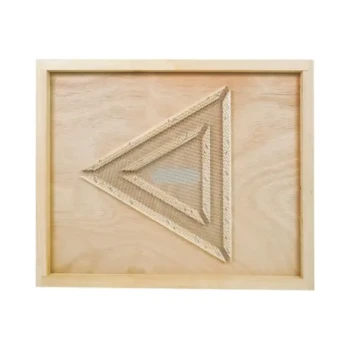
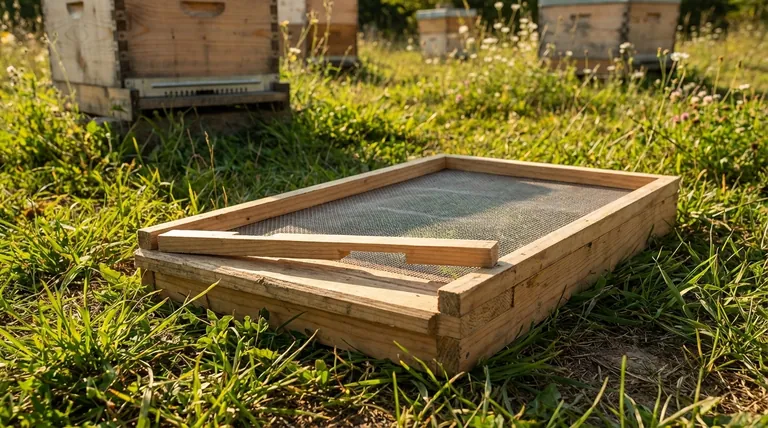
The screened bottom board replaces solid wood with a durable #8 hardware cloth mesh. This simple modification transforms the floor from a passive component into an active management tool, addressing two of the most significant challenges in modern beekeeping.
A System for Passive Climate Control
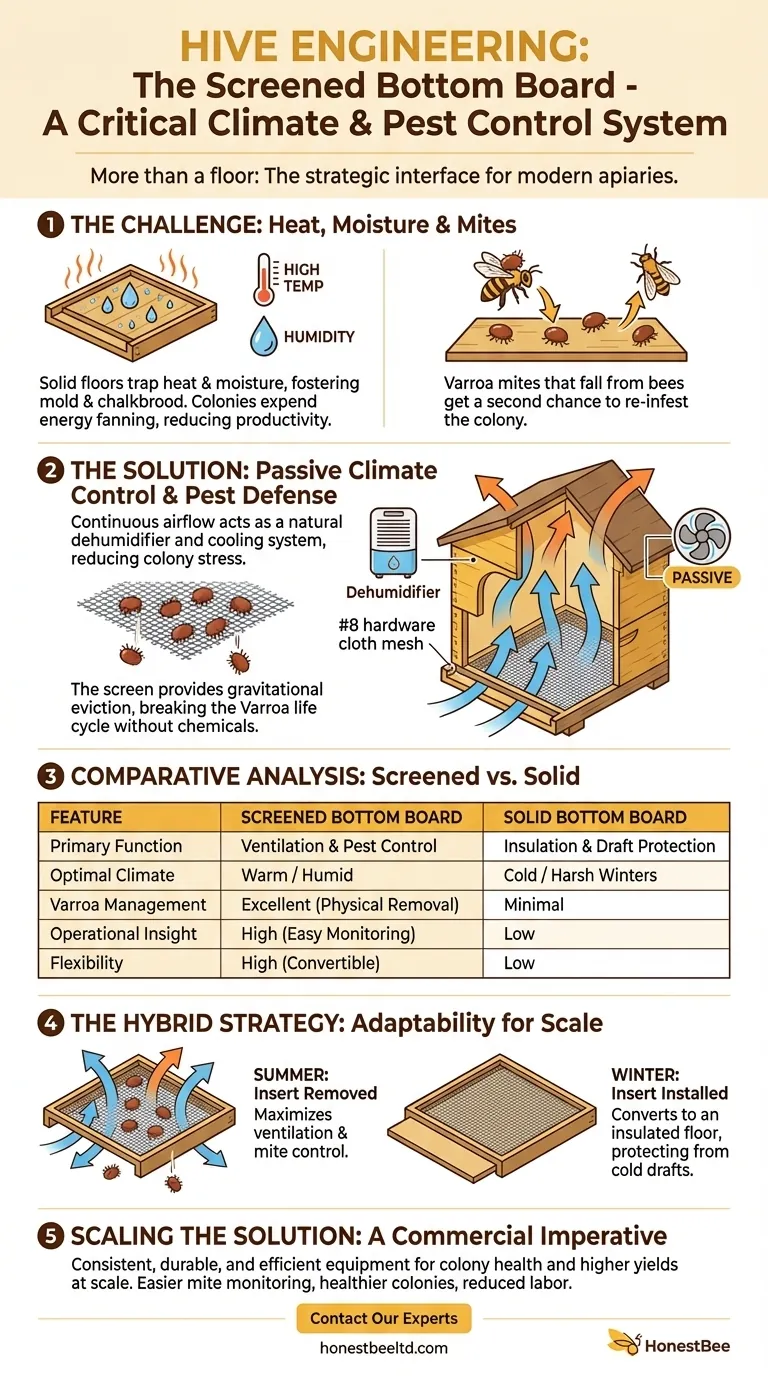
The screen provides constant, passive ventilation. As warm, moist air rises within the hive, fresh, dry air is drawn in from below. This continuous airflow acts as a natural dehumidifier and cooling system.
The colony no longer has to fight its own microclimate. The bees can dedicate more energy to foraging and brood-rearing, leading to a stronger, more productive hive. It is a beautifully simple solution to a complex thermodynamic problem.
A Physical Trap for a Biological Threat
The Varroa destructor mite is the single greatest threat to honeybee colonies worldwide. An effective management strategy is non-negotiable for any serious beekeeping operation.
The screened bottom board is a masterstroke of Integrated Pest Management (IPM). When mites, in the course of their life cycle, fall from their host bee, a solid floor gives them a second chance. They can simply wait and climb aboard the next passing bee.
A screen removes that chance. Mites that fall drop completely out of the hive. This simple act of gravitational eviction breaks their life cycle without chemicals, providing a constant, low-level defense that reduces the overall mite load in the colony.
The Psychology of Choice: Ventilation vs. Insulation
The decision between a screened or solid bottom board is a calculated risk assessment based on your primary environmental threat: Is it the sweltering heat of summer or the biting cold of winter?
| Feature | Screened Bottom Board | Solid Bottom Board |
|---|---|---|
| Primary Function | Ventilation & Pest Control | Insulation & Draft Protection |
| Optimal Climate | Warm / Humid | Cold / Harsh Winters |
| Varroa Management | Excellent (Physical removal of mites) | Minimal |
| Operational Insight | High (Allows for easy mite drop counts) | Low |
| Flexibility | High (Can be converted with an insert) | Low |
The Hybrid Philosophy: Adaptability as a Strategy
For the modern commercial apiary, the debate is not about choosing one over the other. It is about choosing adaptability.
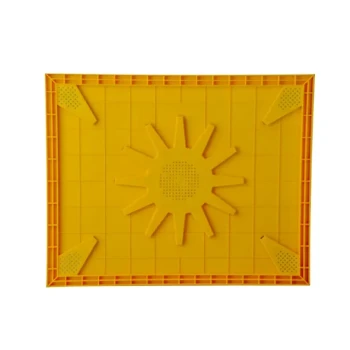
The most effective solution is a high-quality screened bottom board equipped with a removable insert.
- Summer: The insert is removed, maximizing ventilation and mite control during the most critical production months.
- Winter: The insert is slid into place, effectively converting the screen into a solid, insulated floor that protects the colony from cold drafts.
This hybrid approach provides the best of both worlds, allowing an operator to fine-tune their equipment to the precise needs of the season.
Scaling the Solution: A Commercial Imperative
For a commercial beekeeper or equipment distributor, this decision is magnified across hundreds or thousands of hives. Consistency, durability, and efficiency are paramount.
A well-engineered screened bottom board is not an expense; it is an investment in colony health and operational efficiency. Easier mite monitoring via "sticky boards" saves countless hours of labor. Healthier, less-stressed colonies are more productive and require fewer costly interventions. The return on investment is measured in stronger colonies and higher yields.
At HONESTBEE, we specialize in supplying commercial apiaries and distributors with the durable, precision-built beekeeping equipment required to implement these strategies at scale. Our wholesale focus ensures you receive reliable, high-performance gear like screened bottom boards that form the foundation of a successful operation.
The right foundation for your hives starts with the right equipment and the right partner. Contact Our Experts
ビジュアルガイド
関連製品
- 卸売のための無地の底板オーストラリアの松の木のラングストロスの底板
- 卸売のためのオーストラリアの松の木の Langstroth スクリーンの底板
- ラングストロス養蜂用ソリッドボトムボード
- 養蜂用ラングストローススクリーン底板 卸売り
- HONESTBEE ビーハイブフレーム生産のためのマシンを形成する精密トップボトムバー