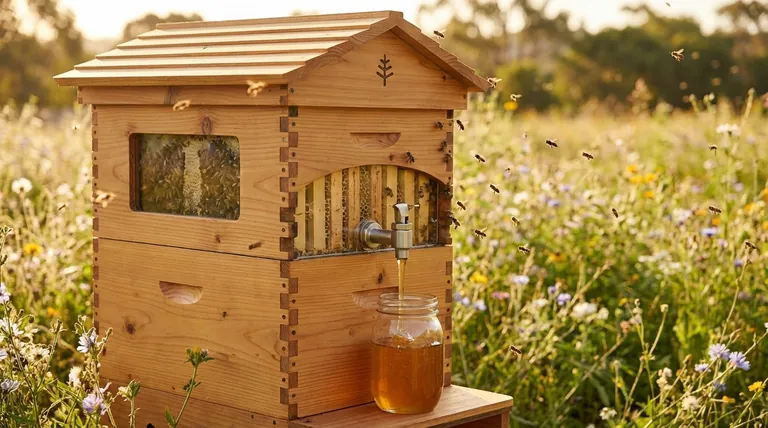
For commercial beekeepers and apiary managers, efficiency and hive health are non-negotiable. Flow Hives have emerged as a game-changer, structurally redefining honey extraction to minimize labor while safeguarding colony integrity. Below, we dissect how this innovation outperforms traditional methods—delivering measurable time savings, reducing physical strain, and promoting sustainable beekeeping practices.
Flow Hive vs. Traditional Harvesting: A Structural Breakdown
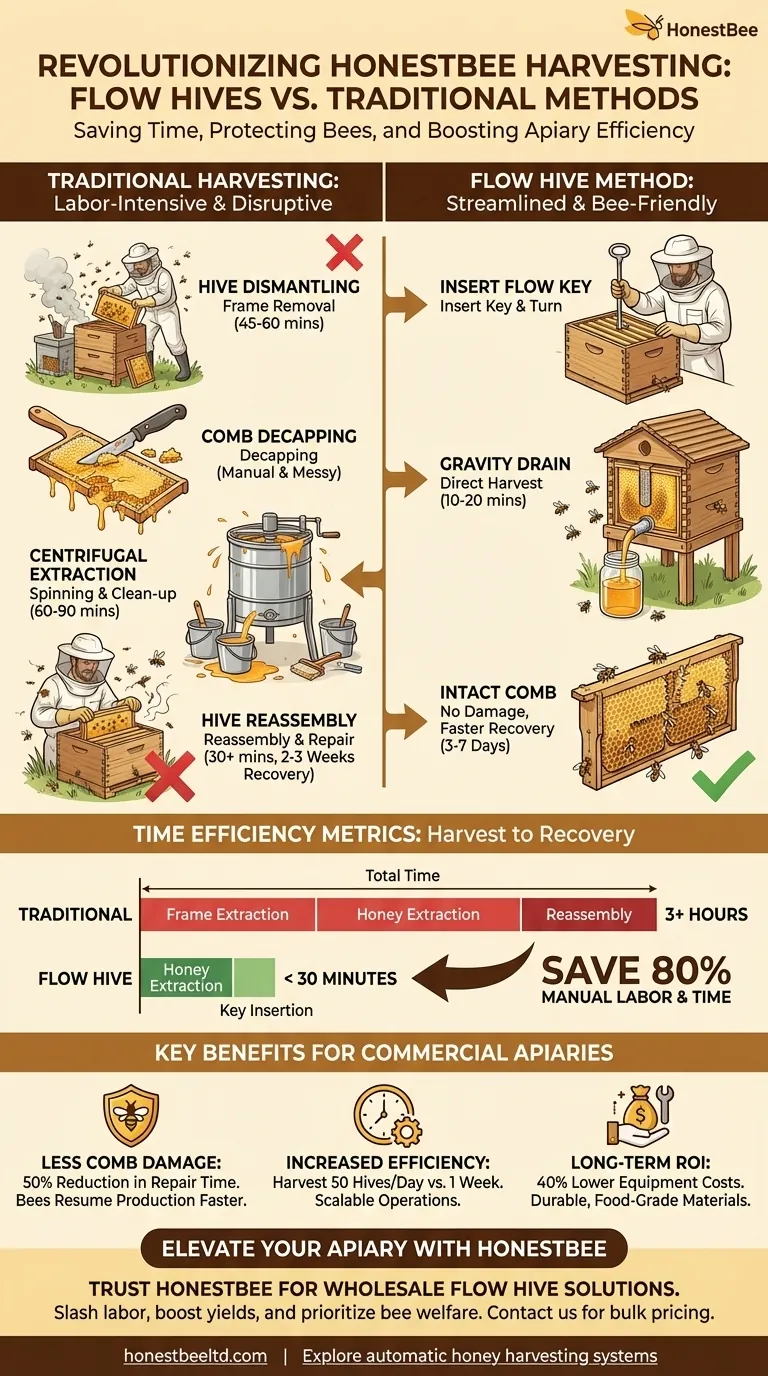
Key Takeaway: Flow Hives eliminate 80% of manual steps in conventional harvesting by integrating a patented honey-draining mechanism.
Traditional methods require:
- Hive dismantling: Removing frames individually, often agitating bees.
- Comb decapping: Cutting wax seals with heated knives, risking comb damage.
- Centrifugal extraction: Spinning frames in bulky equipment, which demands cleanup and comb repairs.
In contrast, Flow Hives use pre-formed plastic frames with partially formed honeycomb cells. When honey is ready, beekeepers:
- Insert a Flow Key to split cells vertically, releasing honey via gravity.
- Collect honey directly into jars through a spout—no extraction machinery needed.
- Leave the comb intact; bees rebuild only the split portions, reducing repair labor.
"The non-intrusive design means colonies stay calm during harvests—a critical advantage for commercial operations managing hundreds of hives."
How Comb Preservation Reduces Beekeeper Workload
Key Takeaway: Intact combs cut post-harvest repairs by half, freeing up labor for other apiary tasks.
Traditional harvesting damages wax cells, forcing bees to:
- Rebuild combs from scratch, consuming energy and time.
- Redirect workers from honey production to comb repair, lowering yields.
Flow Hives address this by:
- Minimizing cell damage: Only the split portion of cells requires rebuilding. Research shows this reduces repair time by approximately 50%.
- Supporting faster hive recovery: Bees resume honey production within days versus weeks.
For commercial apiaries, this translates to:
✔ Fewer labor hours spent on comb maintenance.
✔ Higher honey output per season due to uninterrupted bee activity.
Time Efficiency Metrics: From Harvest to Hive Recovery
Key Takeaway: Flow Hive users report harvesting in under 30 minutes—versus 3+ hours traditionally—with no post-harvest cleanup.
Comparative data reveals:
| Task | Traditional Method | Flow Hive Method |
|---|---|---|
| Frame extraction | 45–60 minutes | 0 minutes |
| Honey extraction | 60–90 minutes | 10–20 minutes |
| Hive reassembly | 30+ minutes | 0 minutes |
| Comb repair period | 2–3 weeks | 3–7 days |
"One commercial beekeeper noted harvesting 50 hives in a single day with Flow Hives—a task that previously took a week."
Addressing Beekeeper Concerns: Durability and Long-Term Benefits
Key Takeaway: Despite initial skepticism, Flow Hives demonstrate commercial-grade durability and ROI within 2–3 harvest seasons.
Common questions answered:
1. Do plastic frames harm bees?
- No. Food-grade materials are used, and bees readily accept the frames, coating them with propolis.
2. Can Flow Hives handle high-volume harvesting?
- Yes. Reinforced frames withstand repeated use, and the streamlined process allows for scalable operations.
3. What’s the long-term cost savings?
- Eliminating extractors, decapping tools, and repair labor reduces equipment costs by roughly 40% over time.
Elevate Your Apiary’s Efficiency with HONESTBEE
Commercial beekeepers and distributors trust HONESTBEE for wholesale beekeeping solutions that prioritize productivity and bee welfare. Our Flow Hive systems are designed to:
- Slash harvest labor by 70%+
- Boost honey yields through faster hive recovery
- Reduce equipment costs long-term
Ready to transform your harvests? Contact HONESTBEE today for bulk pricing on Flow Hive setups tailored to commercial operations.
"Innovation meets tradition—harvest smarter, not harder."
Products You Might Be Looking For:
Explore automatic honey harvesting systems
ビジュアルガイド
関連製品
- ステンレススチール製丸型ハチの巣換気口
- プロ仕様の折りたたみ式ビーハイブ・ハンドル
- 養蜂用ダダントサイズ木製巣箱
- 卸売のための無地の底板オーストラリアの松の木のラングストロスの底板
- 養蜂用大型巣箱番号セット












