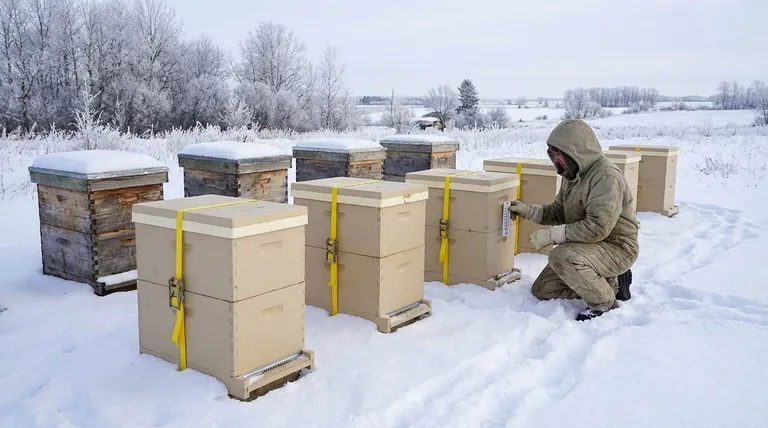
Beekeepers face a critical challenge each winter: sustaining colony health despite plummeting temperatures. Traditional wooden hives, while widely used, struggle to maintain stable conditions—leading to colony losses that can exceed 30% in harsh climates. Styrofoam (EPS) beehives emerge as a game-changer, leveraging superior insulation to reduce energy expenditure and condensation risks. Research shows colonies in insulated hives require up to 40% less honey consumption during winter, directly translating to stronger spring populations.
Why Thermal Regulation is Critical for Overwintering Bees
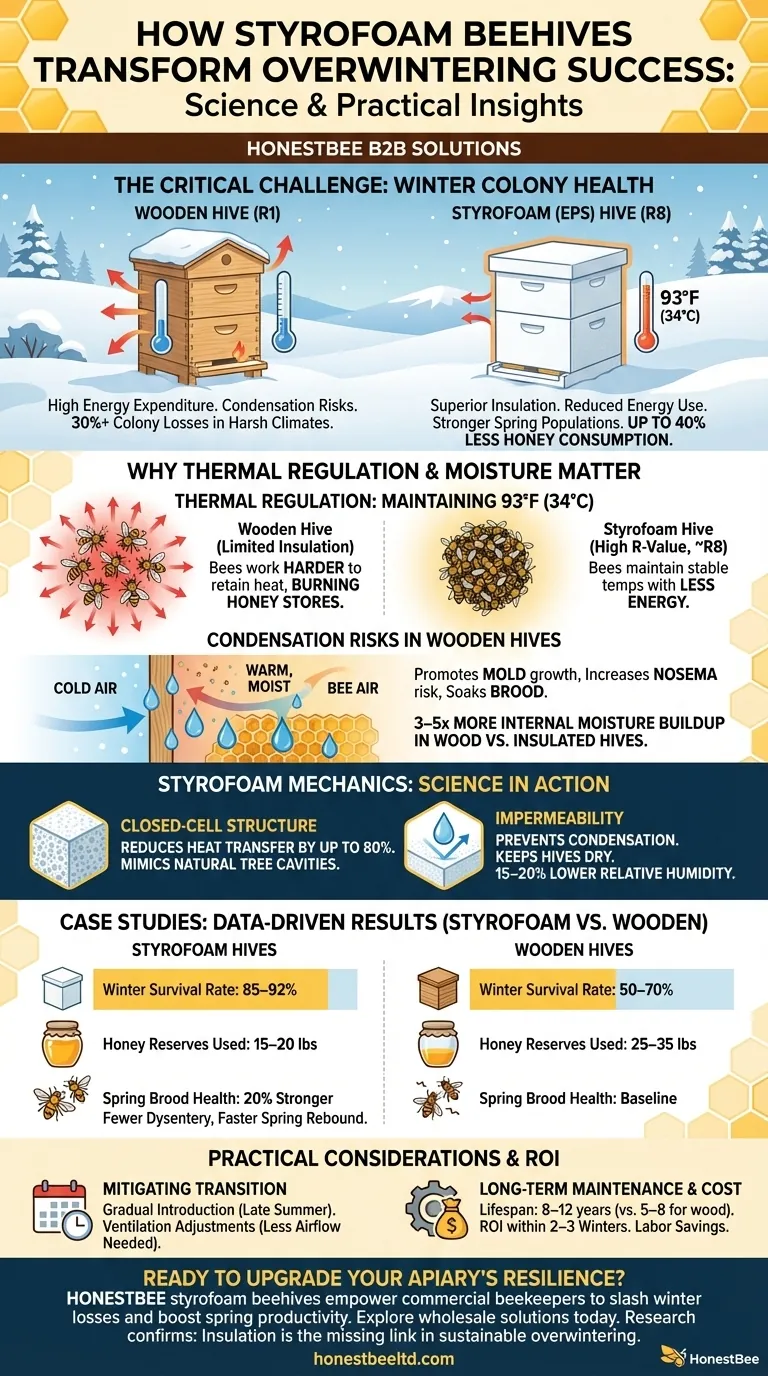
Honeybees survive winter by clustering and metabolizing honey, but their success hinges on maintaining a core hive temperature around 93°F (34°C). Wooden hives, with limited insulation, force bees to work harder to retain heat—burning through honey stores and exhausting workers.
How Condensation Compromises Traditional Wooden Hives
Condensation forms when warm, moist air from bee respiration meets cold hive walls, creating water droplets that:
- Promote mold growth
- Increase risk of Nosema infections (a gut parasite linked to colony collapse)
- Soak brood comb, chilling larvae
Studies note that wooden hives experience 3–5 times more internal moisture buildup than insulated alternatives during temperature swings.
The Insulation Mechanics of Styrofoam Beehives
Polystyrene’s closed-cell structure delivers two key advantages:
- High R-Value: With an insulation rating of ~R8 (versus wood’s R1), EPS reduces heat transfer by up to 80%. Bees maintain stable temperatures with less energy.
- Moisture Control: The material’s impermeability prevents condensation, keeping hives dry. Field observations show styrofoam hives maintain relative humidity levels 15–20% lower than wooden counterparts.
This dual action mimics natural tree cavities—the bees’ evolutionary preference—where thick walls buffer external conditions.
Case Studies: Survival Rates and Colony Health in Styrofoam vs. Wooden Hives
Data from commercial apiaries reveal consistent trends:
| Metric | Styrofoam Hives | Wooden Hives |
|---|---|---|
| Winter Survival Rate | 85–92% | 50–70% |
| Honey Reserves Used | 15–20 lbs | 25–35 lbs |
| Spring Brood Health | 20% stronger | Baseline |
Beekeepers also report fewer instances of dysentery (a cold-stress symptom) and faster spring population rebounds in insulated hives.
Practical Considerations for Adopting Styrofoam Hives
Mitigating Transition Challenges
Switching mid-season can disrupt colony rhythms. Best practices include:
- Gradual Introduction: Move colonies to styrofoam in late summer, allowing bees to adapt before winter.
- Ventilation Adjustments: Reduce top entrances slightly; EPS requires less airflow than wood to manage humidity.
Long-Term Maintenance and Cost Efficiency
While styrofoam hives cost 10–15% more upfront, their durability and efficiency yield ROI within 2–3 winters:
- Lifespan: 8–12 years (vs. wood’s 5–8 years) with proper UV-protective paint.
- Labor Savings: Fewer winter interventions needed for moisture control or supplemental feeding.
Ready to upgrade your apiary’s resilience? HONESTBEE’s styrofoam beehives empower commercial beekeepers to slash winter losses and boost spring productivity—backed by materials science and real-world results. Explore our wholesale solutions today to future-proof your operation.
Research, field data, and beekeeper testimonials confirm: Insulation isn’t just an upgrade—it’s the missing link in sustainable overwintering.
ビジュアルガイド
関連製品
- 発泡スチロールのミニ交尾ヌックボックスとフレームフィーダー 発泡スチロールの蜂の巣 3 フレーム ヌックボックス
- 業務用断熱プラスチック製ミツバチの巣箱
- ステンレス鋼の蜂の巣の燻製器卸売のための養蜂の燻製器
- ステンレススチール製丸型ハチの巣換気口
- 養蜂用ダダントサイズ木製巣箱