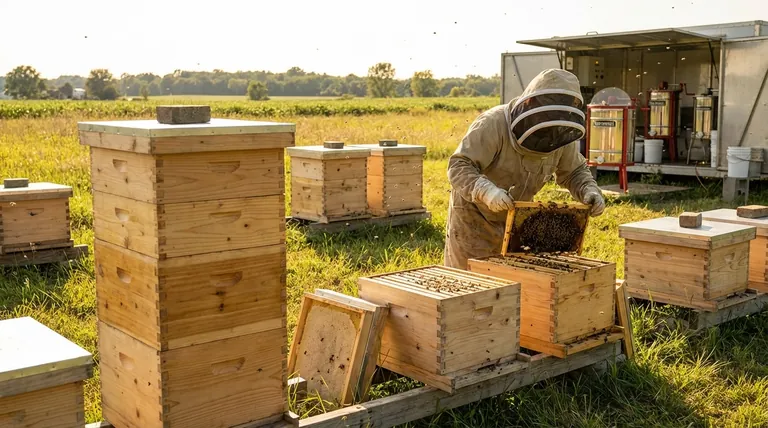
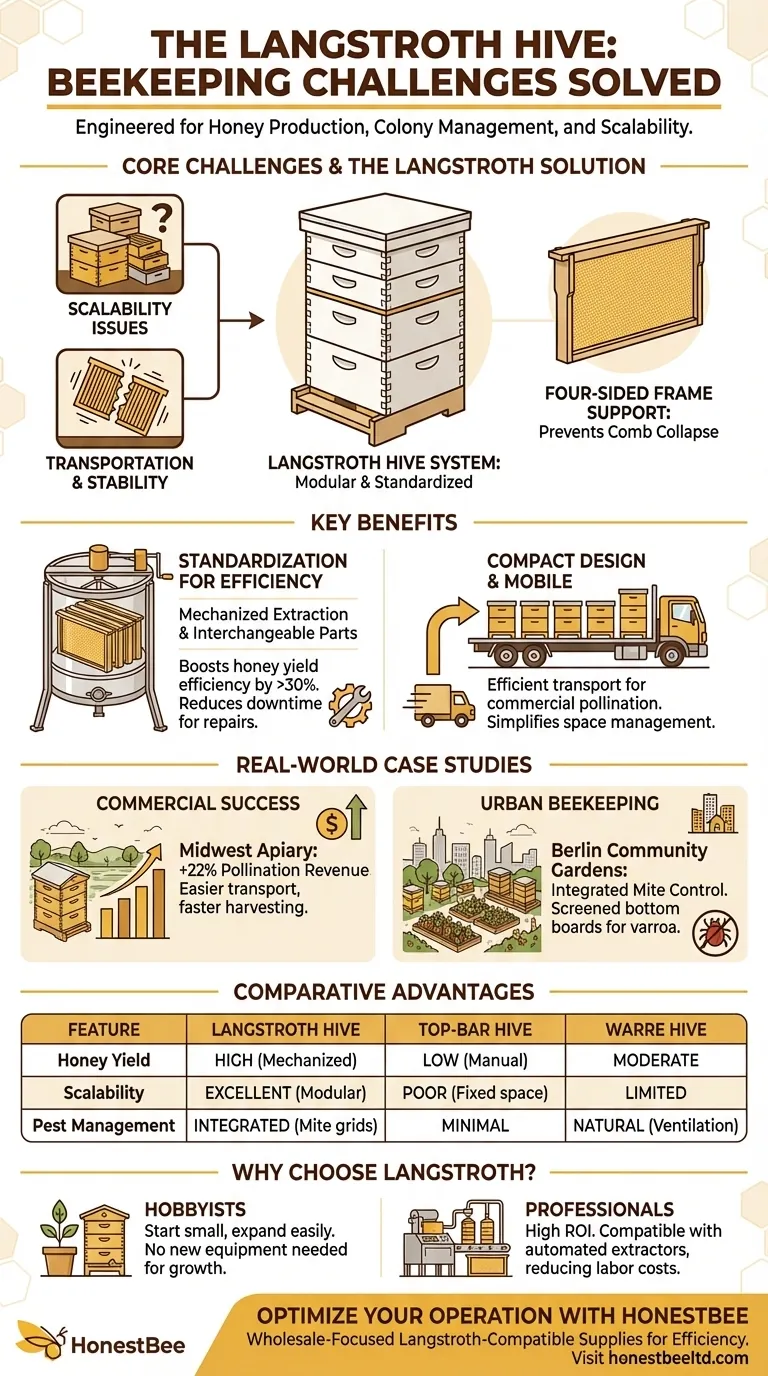
The Langstroth hive isn’t just another beekeeping tool—it’s a meticulously engineered system that addresses core challenges in honey production, colony management, and operational scalability. Whether you’re a hobbyist managing a few hives or a commercial operator overseeing thousands, its standardized design and modular components deliver measurable advantages over traditional hive systems.
The Langstroth Hive: A Dual Solution for Modern Beekeeping
Compact Design and Transportability: Beyond the Basics
Langstroth hives are designed for mobility. Their rectangular boxes stack vertically, allowing beekeepers to:
- Expand or reduce hive capacity by adding/removing supers (honey storage boxes) without disrupting the brood chamber.
- Transport colonies efficiently, a critical feature for commercial pollination services. Research shows migratory beekeepers prefer Langstroth hives because their standardized dimensions integrate seamlessly with loading equipment.
Unlike top-bar hives, where combs are fragile and horizontal, Langstroth frames have four-sided support. This prevents comb collapse during inspections or moves—especially vital when handling heavy honey stores.
Standardization: The Backbone of Scalable Honey Production
The hive’s uniform measurements (e.g., 19" x 16" frames) enable:
- Interchangeable parts across hives, reducing downtime for repairs.
- Mechanized extraction, as commercial centrifuges are built to Langstroth specifications. Studies indicate this standardization boosts honey yield efficiency by over 30% compared to Warre or top-bar systems.
For urban beekeepers, the design’s predictability simplifies space management. A single Langstroth hive can produce 50–100 lbs of honey annually in optimal conditions, outperforming less structured alternatives.
Case Studies: Real-World Applications Across Beekeeping Scales
- Commercial Success: A Midwest apiary increased pollination contract revenue by 22% after switching to Langstroth hives, citing easier hive transport and faster honey harvesting.
- Urban Beekeeping: Community gardens in Berlin use Langstroth hives for their screened bottom boards, which help control varroa mites without chemicals—a key concern in dense environments.
Comparative Advantages Over Traditional Hive Systems
| Feature | Langstroth Hive | Top-Bar Hive | Warre Hive |
|---|---|---|---|
| Honey Yield | High (mechanized extraction) | Low (manual comb cutting) | Moderate |
| Scalability | Excellent | Poor | Limited |
| Pest Management | Integrated mite grids | Minimal built-in solutions | Natural ventilation focus |
Why hobbyists choose Langstroth: Even small-scale beekeepers benefit from its growth potential. A starter hive can expand into a multi-super system without requiring entirely new equipment—unlike top-bar hives, which cap productivity due to fixed comb space.
For commercial operators, the ROI is clear: Langstroth hives’ compatibility with automated extractors reduces labor costs per pound of honey. One study found commercial apiaries recoup initial setup costs within two seasons.
Ready to Optimize Your Beekeeping Operation?
Whether you’re a distributor supplying apiaries or a beekeeper scaling production, HONESTBEE’s wholesale-focused beekeeping supplies ensure you get Langstroth-compatible equipment designed for efficiency. Explore our durable, standardized solutions to maximize honey yields and simplify hive management.
Have you considered how hive design impacts your long-term beekeeping goals? The Langstroth system’s adaptability quietly shapes modern apiculture, from backyard setups to industrial honey farms.
ビジュアルガイド
関連製品
- 世界のプロ養蜂家向け高性能ラングストロス式養蜂箱
- ラングストロス ミツバチの巣箱 深さ別ボックス
- 養蜂用オーストラリア製ラングストロス蜂の巣箱 卸売業
- ロング・ラングストロス・スタイル・ホリゾンタル・トップ・バー・ハイブ(卸売用
- 卸売のための無地の底板オーストラリアの松の木のラングストロスの底板
関連記事
- フロウハイブ vs. ラングストロース:プレミアム価格が本当の節約をもたらすのはいつか?
- How Langstroth Hives Outperform Other Designs for Commercial Honey Production
- How Langstroth Hives Solve Universal Beekeeping Challenges Through Smart Design
- How the Langstroth Hive Solves Modern Beekeeping’s Biggest Challenges
- ラングストロス式巣箱の設計がミツバチの群れの成長と蜂蜜生産を最適化する仕組み













