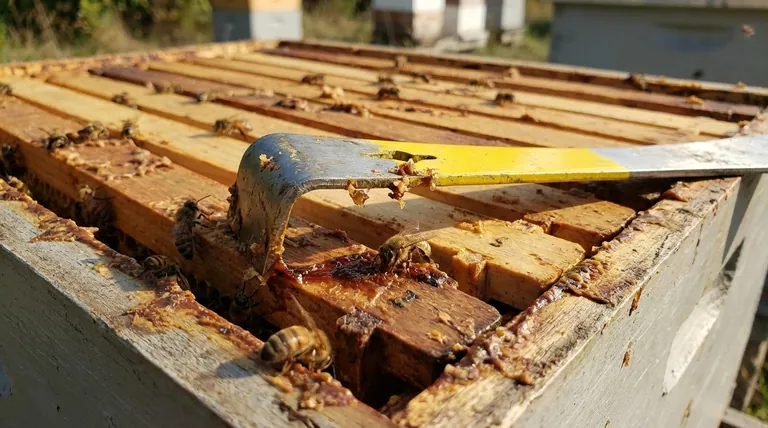
The Sealed World of the Hive
A beehive is a black box.
To an outsider, it's a simple wooden structure humming with life. But to the beekeeper, it’s a sealed fortress. The colony, in its relentless pursuit of security and stability, glues every seam and fills every gap with propolis, a resinous, potent adhesive.
This act of self-preservation creates a profound challenge. How do you assess the queen's health? How do you check for pests? How do you know if the colony is thriving or on the verge of collapse? The hive guards its secrets well.
The key to this world isn’t brute force. It's a simple bar of steel: the hive tool. And how you wield it determines whether you are an inspector or an invader.
Establishing Order: The Primary Mandate
The core function of a hive tool is to restore order to a system that constantly drifts toward architectural chaos. It’s an instrument of control, allowing the beekeeper to impose the necessary logic of the modern hive onto the bees' wilder instincts.
Deconstructing the Fortress: Propolis
Bees use propolis to seal their home against drafts, predators, and pathogens. But this "bee glue" also welds hive boxes together and cements frames in place. Without intervention, a hive becomes a single, immovable block.
The hive tool is used as a lever, precisely inserted into the seams to break these propolis seals with a gentle, steady pry. The goal is surgical access, not demolition. Scraping propolis from the frame rests is not just cleaning; it’s an act of ensuring that every component remains modular and accessible.
Taming Wild Construction: Burr Comb
Bees abhor a vacuum. Any space larger than the precise "bee space" (about 6-9mm) will be filled with unauthorized wax structures known as burr comb. This wild comb connects frames, clogs passages, and turns a routine inspection into a destructive mess.
Scraping away burr comb with the flat edge of the tool is about enforcing the hive's intended design. It prevents you from crushing bees and ensures frames slide out smoothly, preserving the colony's calm and the integrity of the comb.
Maintaining the Foundation: The Bottom Board
The bottom board is the hive's floor, where debris, wax cappings, and dead bees accumulate. This detritus is more than just untidy; it's a potential haven for pests like Small Hive Beetles and a breeding ground for disease.
Using a hive tool to systematically scrape the bottom board is a critical act of preventative medicine. A clean board removes pest habitats and provides a clear surface for monitoring varroa mite populations—turning a simple cleaning task into an essential diagnostic tool.
The Paradox of Intervention: Hygiene is Non-Negotiable
The same tool that grants you access can become the primary vector for disease, spreading devastation from one colony to the next. This is the beekeeper's paradox: intervention is necessary, but it carries immense risk.
Moving from a diseased hive to a healthy one without proper sterilization is like a surgeon using a dirty scalpel. Pathogens responsible for diseases like American Foulbrood can cling to wax and propolis on your tool, dooming the next colony you touch.
A professional's workflow is defined by an unwavering commitment to hygiene.
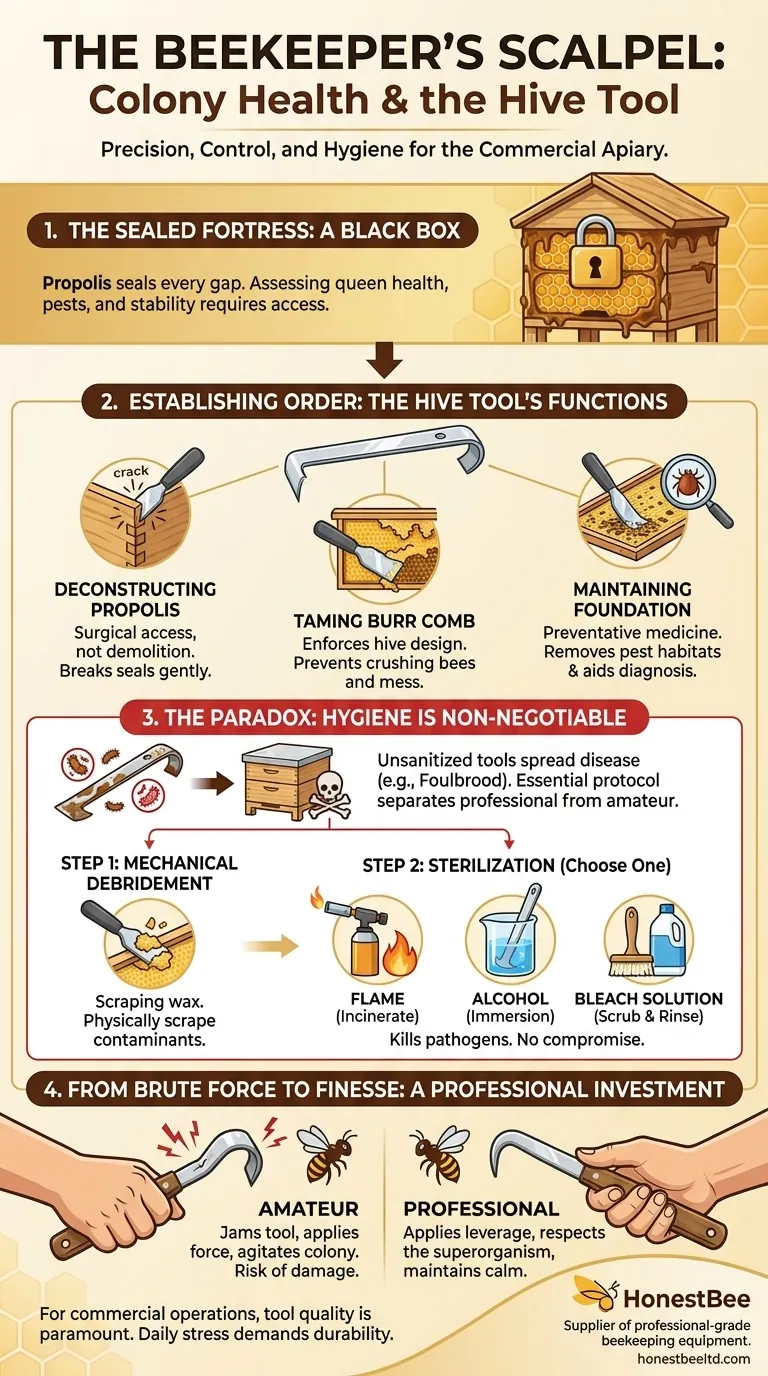
- Step 1: Mechanical Debridement. First, physically scrape all wax, honey, and propolis from the tool. The bulk of contaminants is in this physical matter.
- Step 2: Sterilization. After scraping, the tool must be sanitized. There is no room for compromise.
- Flame: Heating the tool with a blowtorch or in a smoker's fire pot incinerates any remaining pathogens.
- Alcohol: An immersion in isopropyl alcohol effectively kills bacteria and spores.
- Bleach Solution: A scrub with a diluted bleach wash, followed by a thorough rinse, is also effective.
This two-step discipline separates the professional from the hobbyist. It's a non-negotiable protocol.
From Brute Force to Finesse
An amateur jams the tool and uses force. A professional applies leverage with understanding. The mindset is different. You are not fighting the hive; you are working with a living superorganism that responds to pressure and stress.
Sudden, jarring movements trigger a defensive response. Gentle, steady prying keeps the colony calm. A master beekeeper understands that the hive tool is an extension of their hands, used for delicate tasks like lifting the corner of a frame or even scraping a stinger from their skin without injecting more venom.
This finesse requires an instrument that can be trusted. A tool that bends under pressure or has a dull, poorly machined edge makes precise work impossible. It forces the user to apply more pressure, increasing the risk of slips, damaging equipment, and agitating the colony.
For commercial apiaries and equipment distributors, where efficiency and colony health are measured across hundreds or thousands of hives, the quality of this fundamental tool is paramount. The repeated stress of daily, large-scale work demands tools that won't fail. HONESTBEE specializes in supplying durable, reliable, professional-grade beekeeping equipment designed for the rigors of wholesale and commercial operations. We understand that for a professional, a tool is an investment in control and predictability.
The hive tool is ultimately a symbol. It represents the beekeeper's contract with the colony: to provide order, security, and health in exchange for access. Wielded with skill, respect, and discipline, this simple piece of steel makes modern beekeeping possible.
For operations where every hive's health contributes to the bottom line, the quality of your most basic instrument is non-negotiable. Contact Our Experts
ビジュアルガイド
関連製品
- HONESTBEE プロ用ロングハンドルハイブツール(精密切断ブレード付
- プロ用多機能ステンレス製蜂の巣ツール
- HONESTBEE プレミアム・イタリア式蜂の巣ツール(ハードウッドハンドル付
- 人間工学に基づいたプラスチックフレームスペーサーツール(養蜂用
- プロ仕様の折りたたみ式ビーハイブ・ハンドル


















