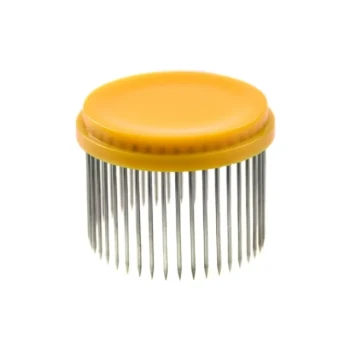
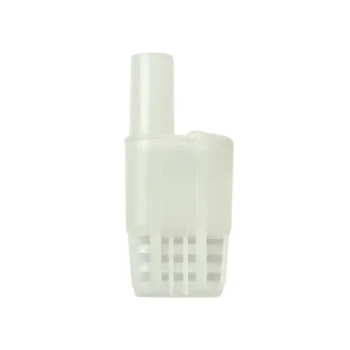
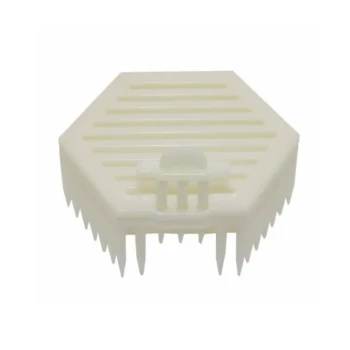
The queen cage acts as a protective interface between a specific queen bee and the rest of a colony. Its distinct functions are to ensure the queen's physical safety during transportation and to facilitate her successful introduction into a new hive by preventing aggressive worker behavior.
The core purpose of a queen cage is to manage the "acceptance period." By physically containing the queen while allowing airflow, it enables the colony to acclimate to her pheromones without the risk of the workers killing her immediately.
The Mechanics of Queen Introduction
The most critical function of the queen cage is facilitating the acceptance of a new genetic line into an existing colony.
Protection from Aggression
When a new queen is introduced, the resident workers often view her as an invader. Without a barrier, they would likely attack and "ball" the queen, overheating and killing her.
The cage provides a physical shield, typically made of wire gauze or mesh. This prevents direct contact and stinging while the colony adjusts to her presence.
Pheromone Acclimation
For a queen to be accepted, the colony must adopt her specific scent (pheromones). The mesh structure of the cage allows air to circulate freely.
This circulation allows the queen's pheromones to permeate the hive gradually. Once the colony's "scent identity" aligns with the new queen, the workers are less likely to reject her upon release.
Logistics and Transportation
Beyond the hive, the queen cage is the industry standard for the safe shipment of breeding stock.
Physical Security in Transit
The cage acts as a secure shipping container. It prevents the queen from being crushed or lost during the shipping process, whether via mail or during transport between apiaries.
Sustenance and Life Support
A queen cannot survive long without food. Queen cages are designed to hold a sugar solution or "candy plug."
This provision sustains the queen (and often a few attendant nurse bees) during her journey. It ensures she remains in a stable physiological state until she reaches her destination.
Hive Management and Inspection
Beekeepers also utilize queen cages, sometimes referred to as "queen clips" in this context, for routine management.
Temporary Isolation
During complex hive inspections, a beekeeper may need to set the queen aside to prevent accidentally harming her.
Isolating her in a cage or clip ensures she does not fall off a frame or get crushed between boxes while the beekeeper manipulates the hive components.
Handling Virgin Queens
Wooden queen cages are specifically useful for holding virgin queens prior to mating or morphological assessment.
The structure allows worker bees to feed and care for the virgin queen through the mesh, maintaining her health while keeping her physically contained and isolated from external disturbances.
Understanding the Trade-offs
While queen cages are essential, they are not a "set it and forget it" tool. Misuse can lead to failure.
The Timing Dilemma
The cage creates a forced delay. If the queen is released too early (before pheromone acclimation), she will likely be killed.
However, if she is caged for too long, her egg-laying capacity is paused. Prolonged confinement can stress the queen and delay the colony's brood production, setting back the hive's growth.
Dependency on Worker Care
While the cage has food, the queen often relies on workers to feed her through the mesh. If the mesh is too fine or blocked, or if the workers ignore her entirely, she may perish inside the cage even if protected from aggression.
Making the Right Choice for Your Goal
Select your approach based on the immediate task at hand:
- If your primary focus is Requeening: Ensure the cage allows for significant airflow to maximize pheromone transfer, and do not release the queen until the workers stop clinging aggressively to the mesh.
- If your primary focus is Transportation: Verify the cage contains sufficient sugar solution or candy to sustain the queen for the entire duration of the trip.
- If your primary focus is Inspection: Use a simple spring-loaded queen clip to temporarily isolate the queen on a frame, ensuring she remains safe while you work.
Ultimately, the queen cage is a tool of patience, allowing biology to take its course safely before physical integration occurs.
Summary Table:
| Function | Primary Purpose | Key Benefit |
|---|---|---|
| Introduction | Physical barrier between queen and workers | Prevents colony aggression/balling |
| Acclimation | Pheromone dispersal through mesh | Facilitates hive acceptance of new scents |
| Transportation | Secure shipping container with candy plug | Ensures survival during transit and logistics |
| Management | Temporary isolation during inspections | Protects queen from accidental crushing |
| Breeding | Containment of virgin queens | Allows feeding while maintaining isolation |
Elevate Your Apiary's Success with HONESTBEE
As a commercial apiary or distributor, you know that the safety of the queen is the heartbeat of the hive. HONESTBEE provides the professional-grade tools you need to ensure seamless colony transitions and peak productivity.
Our comprehensive wholesale portfolio includes:
- Precision Beekeeping Tools: High-quality queen cages, clips, and grafting equipment.
- Advanced Machinery: Hive-making and honey-filling machines for industrial scaling.
- Essential Consumables: A wide array of supplies to keep your operations running smoothly.
Whether you are expanding your commercial operation or stocking a distribution network, our expertise in honey-themed culture and specialized hardware makes us your ideal partner.
Contact us today to explore our wholesale offerings and secure your supply chain.
関連製品
- 耐久性亜鉛メッキスチール製スプリング式女王蜂ケージ
- スライド式ゲートとフィーダープラグ付きプロフェッショナル女王蜂ケージ
- クラシック木製メッシュ式カリフォルニア・クイーンケージ
- プロフェッショナル女王蜂導入・輸送ケージ
- プロフェッショナル多機能女王蜂ケージ