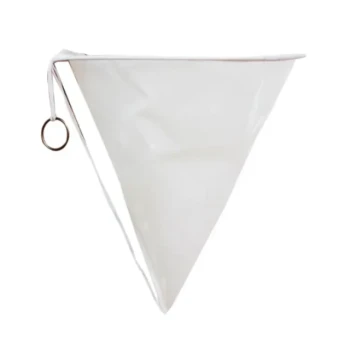
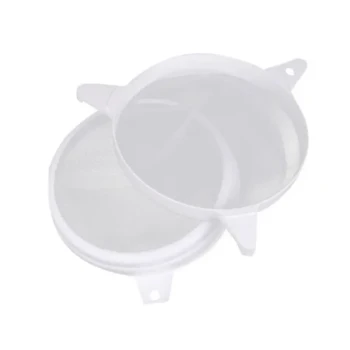
Professional filtration equipment serves as the critical purification step in the post-processing of stingless bee honey. Its primary function is to mechanically remove physical impurities—such as wax fragments, larval debris, and excess pollen—to achieve a clear, market-ready appearance while strictly maintaining the honey’s inherent nutritional value.
Core Takeaway Raw stingless bee honey is often harvested with significant debris due to its unique storage in cerumen pots rather than honeycombs. Professional filtration transforms this raw input into a refined commercial product by eliminating contaminants without stripping away the enzymes and minerals that define its high market value.
Achieving Physical Purity and Clarity
Removal of Harvesting Debris
Stingless bees store honey in irregular wax pots rather than standard honeycombs. Consequently, the harvesting process often introduces unwanted materials.
Professional filtration systems use multi-stage precision mechanisms to remove macroscopic contaminants like wax fragments, larval remains, and bee parts.
Elimination of Microscopic Impurities
Beyond visible debris, raw honey contains microscopic particles that affect texture and quality.
Industrial equipment filters out excess pollen residues and suspended solids. This significantly improves the fluidity of the honey, ensuring it meets the sensory consistency required by consumers.
Enhancing Visual Transparency
One of the most immediate impacts of professional filtration is the improvement of the honey's appearance.
By removing suspended particles, the process results in a clear and transparent product. This visual clarity is a prerequisite for acceptance in modern commercial markets and high-end retail channels.
Preserving Nutritional Integrity
Retention of Bioactive Components
The distinct value of stingless bee honey lies in its medicinal properties.
Unlike aggressive industrial processing, professional filtration equipment is designed to remove waste while ensuring inherent nutritional components remain intact. The system effectively separates debris without compromising natural enzymes, minerals, or flavor profiles.
Gentle Processing Techniques
Stingless bee honey requires a more delicate approach than Apis mellifera (standard honeybee) honey.
Equipment often utilizes gentle pressing or centrifugal techniques specifically calibrated for honey extracted from wax pots. This prevents the chemical and physical degradation of the honey that can occur with high-heat or high-pressure methods.
Understanding the Trade-offs
The Risk of Over-Filtration
While clarity is desirable, extreme filtration can be detrimental.
If filtration is too aggressive (ultra-filtration), it may remove all pollen, which makes it difficult to trace the honey's botanical origin and may reduce its nutritional complexity. A balance must be struck between visual clarity and biological authenticity.
Filtration vs. Moisture Control
It is critical to distinguish between cleaning the honey and stabilizing it.
Filtration removes solids, but it does not remove water. Stingless bee honey has a naturally high moisture content and is prone to fermentation. Filtration alone will not prevent spoilage; it must be paired with moisture control (dehumidification) equipment to ensure shelf stability.
Commercial Standardization
Meeting Regulatory Standards
To move from a raw agricultural product to a regulated food or health item, consistency is key.
Filtration ensures the product complies with national and industrial quality standards regarding hygiene and purity. This is essential for entering premium pharmaceutical and health product markets.
Increasing Product Value
Raw, unfiltered honey is often viewed as a commodity with variable quality.
By utilizing standardized processing workflows to create a refined, hygienic product, producers significantly increase the market value of the honey. It transforms the honey into a high-end good suitable for strict packaging requirements.
Making the Right Choice for Your Goal
To maximize the potential of your stingless bee honey, align your processing strategy with your end-market goals:
- If your primary focus is the Premium Health Market: Prioritize gentle, coarse filtration to maximize the retention of enzymes and pollen, even if the honey is slightly less transparent.
- If your primary focus is Mass Retail Distribution: Prioritize multi-stage precision filtration to ensure absolute visual clarity, shelf stability, and a standardized appearance that appeals to the general consumer.
Professional filtration is the bridge that connects the unique biological richness of wild honey with the rigorous safety and aesthetic demands of the modern consumer.
Summary Table:
| Function Category | Specific Purpose | Benefit to Final Product |
|---|---|---|
| Physical Purity | Removes wax, larvae, and bee parts | Ensures a clean, hygienic product |
| Visual Clarity | Eliminates microscopic suspended solids | Achieves market-ready transparency |
| Nutrient Retention | Gentle separation of debris | Preserves enzymes, minerals, and flavor |
| Commercial Value | Standardizes quality and consistency | Increases appeal for high-end retail markets |
| Regulatory Compliance | Meets hygiene and purity standards | Facilitates entry into pharmaceutical markets |
Elevate Your Honey Production with HONESTBEE
Transitioning from raw harvesting to professional-grade distribution requires the right tools. HONESTBEE specializes in supporting commercial apiaries and distributors with a comprehensive range of beekeeping machinery and equipment. From precision honey-filling machines to advanced processing hardware, we provide the technical solutions you need to preserve the unique medicinal value of stingless bee honey while meeting global market standards.
Whether you are scaling a commercial apiary or supplying essential industry consumables, our team is ready to help you optimize your workflow. Contact us today to explore our wholesale offerings and discover how our expertise can drive your success in the honey industry.
参考文献
- Akhmat Rizkuna, Fandini Melia Anjani. Stingless Bee (Trigona sp.) Beekeeping as an Alternative Economic Source to Support Community Food Security in Lempake, Samarinda. DOI: 10.62383/jkm.v2i2.1443
この記事は、以下の技術情報にも基づいています HonestBee ナレッジベース .
関連製品
- 養蜂のための水浴の暖房が付いている専門のステンレス鋼の蜂蜜のろ過機械
- ステンレス鋼の二重層の蜂蜜のこし器ふるいフィルター
- ステンレススチールトライアングルサポートハニーストレーナーとフィルター
- サポートハンドル付きプロフェッショナルステンレスハニーフィルター
- 電気二重壁蜂蜜ろ過機蜂蜜加工プラント用浄化装置