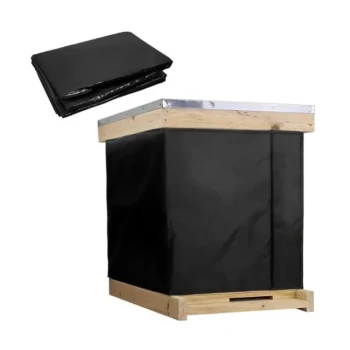
The outer cover serves as the primary roof of the beehive, functioning as the absolute first line of defense against the elements. Often referred to as a "telescoping top," it is typically constructed of wood sheathed in metal, with sides that extend down over the uppermost box to effectively shed water and keep the interior dry.
The outer cover is not just a lid; it is a critical environmental shield. By telescoping over the hive body, it creates a weather-proof seal that protects the colony from rain, predators, and pathogens while working in tandem with the inner cover to maintain internal temperature and accessibility.
The Physics of Protection
The design of the outer cover is engineered to solve specific environmental challenges that threaten the colony's survival.
Water Displacement
The primary function is to prevent moisture intrusion.
The top surface is usually covered in sheet metal to withstand weathering and prevent leaks. The "telescoping" sides hang down a few inches over the top rim of the hive body, ensuring rain drips clear of the joint rather than seeping inside.
Predator and Pathogen Barrier
Beyond weather, the cover acts as a physical fortress.
Metal or plastic coverings provide a robust barrier against predators attempting to breach the hive from above. Furthermore, this solid barrier helps block potential transmission routes for pathogens, offering a basic layer of disease prevention.
The Role in Hive Management
To understand the outer cover's full utility, one must understand how it interacts with the components beneath it.
The Double-Lid System
The outer cover is designed to fit over an inner cover, not directly on the frames.
The inner cover rests on the top super, creating a necessary buffer zone. This system is what allows the outer cover to be removed easily without agitating the bees.
Minimizing Disturbance
Because the outer cover sits loosely over the inner cover, it can be removed without "cracking" a propolis seal.
This allows the beekeeper to gently smoke the bees through the hole in the inner cover before fully opening the hive. This two-step process significantly reduces colony stress during inspections.
Common Pitfalls to Avoid
While the telescoping cover is the standard, improper usage can lead to significant management issues.
The Risk of Propolis Sealing
You should rarely place a telescoping outer cover directly on top of the hive frames without an inner cover.
If you do, the bees will adhere the heavy outer cover to the frames using propolis (bee glue) and wax. This makes opening the hive difficult, jarring, and dangerous for the bees.
Ventilation Mismanagement
The outer cover effectively seals the top of the hive.
Without the air gap provided by the inner cover underneath, the hive may lack necessary insulation or ventilation. In winter, this can lead to moist air contacting cold surfaces, causing dangerous condensation.
Making the Right Choice for Your Goal
To maximize the longevity of your equipment and the health of your bees, consider how you utilize the cover system.
- If your primary focus is weatherproofing: Ensure the metal sheeting is intact and the telescoping sides overlap the top box completely to prevent water ingress.
- If your primary focus is ease of inspection: Always utilize an inner cover beneath the outer cover to prevent the bees from gluing the roof down.
The outer cover is the umbrella that keeps the colony dry, secure, and manageable.
Summary Table:
| Feature | Primary Function | Key Benefit |
|---|---|---|
| Telescoping Design | Water Displacement | Keeps the hive interior dry and rot-free |
| Metal Sheathing | Durable Shielding | Prevents leaks and resists predator intrusion |
| Double-Lid System | Stress Reduction | Allows hive access without breaking propolis seals |
| Air Gap Buffer | Thermal Regulation | Prevents condensation and maintains internal temp |
Elevate Your Apiary’s Resilience with HONESTBEE
At HONESTBEE, we understand that professional beekeeping requires equipment that stands up to the elements. As a leading partner for commercial apiaries and distributors, we provide a comprehensive wholesale range—from precision-engineered hive-making machinery and honey-filling systems to high-quality telescoping covers and essential consumables.
Whether you are scaling your operation or stocking a distribution network, our durable beekeeping tools and hardware are designed to maximize hive longevity and colony health. Contact us today to discuss our wholesale offerings and discover how our industry-leading solutions can grow your beekeeping business.
関連製品
- 養蜂用安全ロックバックル付きプロ用亜鉛メッキハイブストラップ
- 馬毛二列植毛木製ビーブラシ
- プロ用ステンレス鋼Jフック式ハイブツール
- HONESTBEE 人間工学に基づいた養蜂用ステンレス製巣箱ツール
- 7 x 自動蜂の流れの巣箱フレーム プラスチック養蜂の巣箱の供給