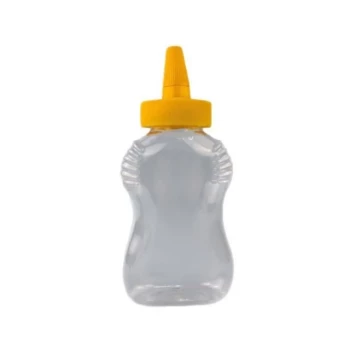
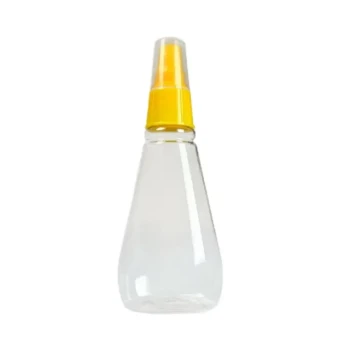
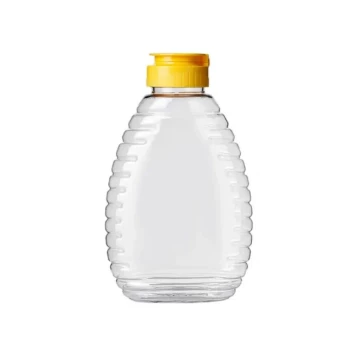
Bottling equipment serves as the final critical safeguard in the honey processing workflow, bridging the gap between bulk preparation and the consumer. Its primary function is to transfer honey into containers and ensure they are sealed correctly to remain free from external contamination. By establishing a secure barrier against air and moisture, this machinery prevents spoilage and preserves the honey's intrinsic quality.
Core Takeaway: While the visible task is filling jars, the engineering purpose of bottling equipment is preservation and hygiene. It creates a hermetic seal that protects honey from its two biggest enemies—moisture and airborne contaminants—while offering the precise volume control necessary for commercial viability.
The Preservation of Quality
The most vital function of bottling equipment is not merely packaging, but the biological stabilization of the product.
Protection Against Environmental Factors
Honey is hygroscopic, meaning it naturally absorbs moisture from the air. Bottling equipment ensures a hermetic seal is applied immediately after filling. This protects the honey from ambient humidity, which can dilute the sugars and lead to fermentation or spoilage.
Eliminating Contamination Risks
Once honey has been filtered, it is vulnerable to re-contamination. Bottling equipment provides a closed or controlled environment for the final transfer. This ensures that the product remains free from dust, debris, or microbes that could compromise the quality achieved during the filtration stage.
Efficiency and Commercial Standards
Beyond preservation, bottling equipment transforms manual processing into a viable commercial operation through precision and hygiene.
Precise Volume Control
Supplementary data indicates that automated filling machinery allows for strict quantitative control. Unlike manual ladling, machines deliver the exact same volume of honey into every container. This consistency is essential for meeting retail weight standards and managing inventory costs.
Reducing Secondary Contamination
Manual handling is the most common source of introduced bacteria or foreign particles. Industrial-grade automated equipment significantly reduces human contact with the product. By minimizing physical handling, the equipment lowers the risk of secondary contamination, ensuring the final product meets strict food safety standards.
Understanding the Trade-offs
While bottling equipment is essential for scaling and quality assurance, it introduces new operational challenges that must be managed.
The Maintenance Requirement
Equipment is only as sanitary as its maintenance routine. As noted in supporting documentation, pumps and nozzles can accumulate residue. Without rigorous cleaning using food-safe solutions, the equipment itself can become a source of bacterial buildup, negating the hygiene benefits it provides.
Complexity vs. Throughput
Moving from manual to automated bottling increases production line throughput significantly. However, it also introduces technical complexity. Operators must balance the need for speed with the necessity of maintaining a sterile environment, as faster lines require more diligent monitoring to prevent mechanical errors or sealing failures.
Making the Right Choice for Your Goal
To select the right approach to bottling, you must align the equipment's capabilities with your specific production scale.
- If your primary focus is Product Stability: Prioritize equipment with advanced sealing technologies to ensure an absolute barrier against air and moisture ingress.
- If your primary focus is Commercial Scale: Focus on automated machinery that offers high-precision volume control to maximize throughput and ensure regulatory weight compliance.
The function of bottling equipment is ultimately to lock in the purity achieved during extraction, ensuring the honey reaches the consumer exactly as intended.
Summary Table:
| Key Function | Primary Benefit | Operational Impact |
|---|---|---|
| Hermetic Sealing | Prevents moisture absorption and fermentation | Extends shelf life and preserves flavor |
| Volume Control | Ensures consistent filling weights | Meets retail standards and reduces waste |
| Contamination Control | Minimizes human contact and airborne debris | Guarantees food safety and product purity |
| Automated Throughput | Increases production speed | Lowers labor costs and enables scaling |
Elevate Your Honey Production with HONESTBEE
At HONESTBEE, we understand that the right bottling equipment is the difference between a local hobby and a thriving commercial enterprise. We cater specifically to commercial apiaries and distributors, providing a comprehensive wholesale range of beekeeping machinery—from high-precision honey-filling machines to specialized hive-making equipment and essential consumables.
Why partner with us?
- Precision Engineering: Achieve exact volume control to maximize your margins.
- Quality Assurance: Our equipment ensures the hermetic seals necessary to prevent spoilage.
- Full-Spectrum Support: We supply everything from industrial hardware to honey-themed cultural merchandise.
Ready to scale your operations and protect your harvest? Contact us today to explore our wholesale solutions and see how HONESTBEE can streamline your path from hive to shelf.
関連製品
- 半自動小さい蜂蜜のびんの充填機の蜂蜜の注入口
- 空気圧ダブルノズルハニーフィリングボトリング包装機
- 二重ノズルの小さい蜂蜜の充填機の蜂蜜の小袋のパッキング包装装置
- 蜂蜜のための手動蜂蜜の充填機びん詰めにする機械
- 空気圧式ペースト充填機 瓶詰め包装機 シングルノズル