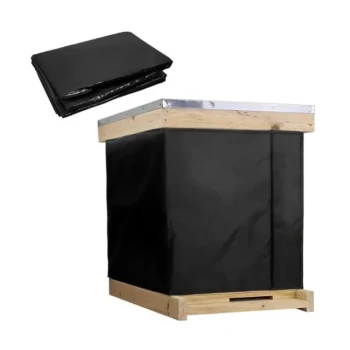
Infrared heating lamp arrays serve as precise, controllable substitutes for solar radiation in thermal experiments. When coupled with high-precision temperature controllers, these systems replicate the intense thermal stress of extreme summer weather. This setup allows researchers to subject beehives to constant, elevated temperatures to test how well specific materials prevent heat from penetrating the hive.
By simulating consistent environmental heat, these arrays enable the quantitative evaluation of insulation materials, specifically natural fibers, ensuring the hive maintains a safe internal climate for the colony.
The Mechanics of Thermal Simulation
Replicating Extreme Weather
The primary function of the infrared array is to mimic environmental thermal stress. Rather than relying on unpredictable weather patterns, the array generates a sustained heat load equivalent to a severe summer heatwave.
Ensuring Experimental Consistency
Reliability is achieved through high-precision temperature controllers. These devices regulate the output of the lamps to maintain a steady thermal environment. This consistency is vital for eliminating variables, ensuring that any changes in internal hive temperature are due to the material being tested, not fluctuations in the heat source.
Quantifying Material Performance
Evaluating Heat Intrusion
The ultimate goal of using these arrays is to measure external heat intrusion. By blasting the exterior of the hive with infrared heat, researchers can measure how much of that thermal energy migrates to the interior.
Testing Natural Fibers
The reference specifically highlights the use of these arrays to evaluate natural fiber materials. The controlled heat source allows for a direct, quantitative comparison of different fibers to determine which offers the best protection for the bees' thermal comfort.
Critical Considerations and Trade-offs
The Necessity of Uniformity
While powerful, an array must be calibrated to provide even heat distribution. If the lamps are not positioned correctly, "hot spots" can occur on the hive surface, leading to skewed data that does not accurately represent general atmospheric heat.
Artificial vs. Natural Conditions
Infrared lamps are an excellent proxy for thermal load, but they focus strictly on thermal radiation. They do not perfectly replicate the full spectrum of sunlight (including UV), but for the specific purpose of testing insulation and heat transfer, they are the industry standard for controlled experiments.
Making the Right Choice for Your Experiment
If your primary focus is comparing insulation materials: Prioritize the stability of your heat source to ensure that temperature differences are strictly a result of material performance, not lamp fluctuation.
If your primary focus is replicating specific climates: Adjust the set-point of your high-precision controller to match the peak historical temperatures of the geographic region you are studying.
Reliable thermal data is the cornerstone of developing hive structures that effectively shield colonies from the dangers of overheating.
Summary Table:
| Feature | Role in Thermal Experiments | Benefit to Researchers |
|---|---|---|
| Infrared Array | Replicates solar radiation/thermal stress | Provides a consistent, controllable heat load |
| High-Precision Controller | Regulates lamp output and temperature | Eliminates variables for reliable, repeatable data |
| Quantitative Evaluation | Measures external heat intrusion | Identifies the most effective insulation materials |
| Focus on Natural Fibers | Tests material thermal resistance | Ensures hive designs protect bees from overheating |
Optimize Your Apiary Operations with HONESTBEE
At HONESTBEE, we understand that maintaining a stable climate is critical for colony survival and productivity. As a premier provider for commercial apiaries and distributors, we supply a comprehensive range of beekeeping tools, specialized machinery, and hive-making equipment designed to meet the highest industry standards.
Whether you are looking for advanced hive-making machines to build better-insulated structures or need high-quality consumables and honey-themed merchandise, our wholesale portfolio has you covered.
Ready to scale your production or upgrade your equipment? Contact us today to learn how HONESTBEE’s specialized hardware and global supply chain can empower your beekeeping business.
参考文献
- Milagros Casado Sanz, Juan Francisco Fuentes‐Pérez. Comparative Study of Natural Fibres to Improve Insulation in Wooden Beehives Using Sensor Networks. DOI: 10.3390/app14135760
この記事は、以下の技術情報にも基づいています HonestBee ナレッジベース .