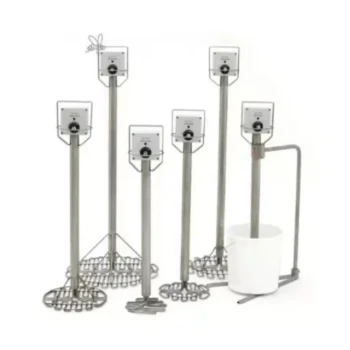
Industrial-grade honey presses are specialized mechanical systems designed to maximize honey extraction through applied pressure. Unlike traditional manual methods or thermal processing, these machines separate honey from the comb with high efficiency. Their primary function is to deliver commercial-scale yields while strictly maintaining the chemical and biological purity of the final product.
Core Takeaway Industrial honey presses solve the conflict between volume and quality. They allow producers to achieve high-yield extraction rates through mechanical force, avoiding the use of heat that destroys natural enzymes, thereby preserving the honey's premium status.
The Mechanics of Extraction
Leveraging Mechanical Pressure
The fundamental operation of an industrial honey press relies on controlled mechanical pressure.
Rather than relying on gravity or simple straining, the machine compresses the honeycomb material. This physical force forces the liquid honey out of the wax structure more effectively than manual squeezing ever could.
Maximizing Yield Efficiency
For commercial operations, yield is the primary metric of success.
Primary references indicate that mechanical presses significantly increase honey yield compared to traditional methods. By applying consistent, high-force pressure, the equipment ensures that the minimum amount of usable product is left behind in the wax residue.
Quality Preservation and Purity
Retention of Active Ingredients
The most significant advantage of using a press over thermal extraction methods is the preservation of natural active ingredients.
Honey contains sensitive enzymes and nutrients that define its quality. Industrial presses extract the liquid without altering its chemical composition, ensuring the honey remains "raw" and biologically active.
Eliminating Heat Damage
Many refinement methods use heat to lower viscosity and speed up flow, but this degrades quality.
Industrial presses utilize physical separation rather than thermal energy. This prevents the caramelization of sugars and the destruction of heat-sensitive compounds, resulting in a product with superior flavor and nutritional value.
Understanding the Trade-offs
Equipment Complexity and Cost
While superior to manual squeezing, industrial presses represent a significant capital investment.
Unlike simple strainers used by hobbyists, these are complex machines requiring maintenance and capital. They are "essential equipment for commercial-scale production," implying they may be overkill for small-scale or backyard apiary operations.
Processing vs. Conservation
It is important to distinguish the press from other equipment types.
While presses maximize yield from the comb, they typically alter the wax structure during compression. This differs from centrifugal extractors (mentioned in supplementary data), which spin frames to save the comb for reuse. A press prioritizes the harvest quantity and quality of the honey, potentially at the expense of reusing the comb structure immediately.
Making the Right Choice for Your Goal
To determine if an industrial honey press fits your refinement line, consider your production targets:
- If your primary focus is Maximum Yield: The press is the superior choice, as mechanical pressure extracts significantly more volume than gravity or manual straining.
- If your primary focus is Premium Quality: The press is ideal because it avoids heating, ensuring the retention of all natural enzymes and allowing for "raw" product branding.
- If your primary focus is Commercial Scale: This equipment is essential for moving beyond hobbyist limitations to achieve the standardized throughput required for retail markets.
Industrial-grade presses bridges the gap between artisanal quality and industrial quantity, allowing for scalable production without compromising the integrity of the honey.
Summary Table:
| Feature | Industrial Honey Press | Traditional Methods | Centrifugal Extractors |
|---|---|---|---|
| Extraction Method | Mechanical Pressure | Gravity/Manual Strain | Centrifugal Force |
| Heat Exposure | None (Cold Process) | Variable/High Heat | None |
| Honey Yield | Maximum Efficiency | Low to Moderate | High |
| Enzyme Preservation | Superior (Raw Quality) | Often Degraded | Excellent |
| Comb Condition | Compressed/Crushed | Often Damaged | Retained for Reuse |
| Target Scale | Commercial & Wholesale | Hobbyist | Commercial |
Elevate Your Honey Production with HONESTBEE
Are you looking to scale your apiary operations or expand your wholesale distribution? HONESTBEE specializes in empowering commercial beekeepers and distributors with the industry's most reliable equipment.
Our industrial-grade honey presses are engineered to maximize your harvest yield while protecting the delicate enzymes that define premium raw honey. From specialized honey-filling machines to advanced hive-making hardware, HONESTBEE provides a comprehensive range of beekeeping tools, machinery, and consumables tailored to your business needs.
Take the next step in commercial beekeeping excellence. Contact our expert team today to discover how our tailored equipment solutions can streamline your production and increase your market value.
参考文献
- Nana Owusu-Ansah, Nikhil Agarwal. Apiculture and Conservation Opportunities: The Case of Sayinga-Kasena-Gavara-Kara. DOI: 10.5281/zenodo.3951599
この記事は、以下の技術情報にも基づいています HonestBee ナレッジベース .
関連製品
- 養蜂のための水浴の暖房が付いている専門のステンレス鋼の蜂蜜のろ過機械
- ステンレススチールジャックタイプハニーコームプレス機ワックスとハニーセパレーター
- HONESTBEE 4フレームマニュアル養蜂用ハニーエクストラクタを反転自己
- 養蜂のための手動ハンドクランク4フレームハニー抽出遠心分離機
- 三脚サポートスタンド付きプロ用ハニーフィルター