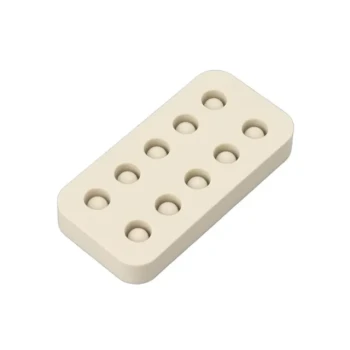
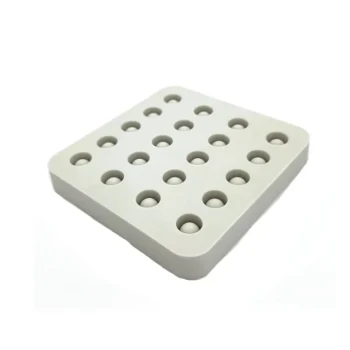
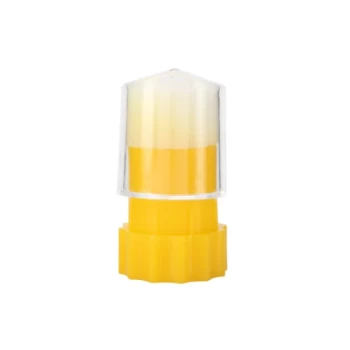
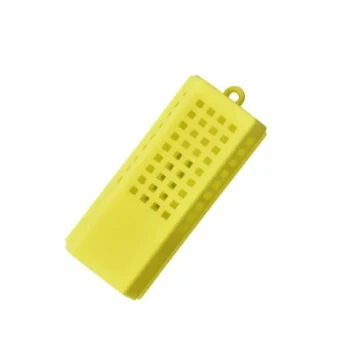
Artificial queen cell cups serve as the foundational physical interface between a beekeeper’s selected larvae and the colony's nurse bees. Their primary function is to act as the initial carrier for larvae during grafting or transfer, simulating the base of a natural queen cell to trigger the colony's rearing instincts.
By mimicking the specific geometry of a natural queen cell base, these cups do more than hold a larva; they induce a biological response in nurse bees to initiate intensive feeding and care. This structural trigger is essential for accumulating the concentrated royal jelly required for successful queen differentiation.
The Biological Function of Cell Cups
Triggering the Rearing Impulse
The shape of the artificial cup is engineered to deceive the colony. By replicating the specific curvature and depth of a natural queen cell base, the cup visually and physically guides nurse bees to recognize the introduced larva as a potential queen.
This recognition initiates the "rearing impulse." Without this structural cue, worker bees might ignore the larva or treat it as a standard worker, failing to provide the specific care required for queen development.
The Royal Jelly Reservoir
Once the rearing behavior is triggered, the cup functions as a containment vessel for nutrition. It allows nurse bees to deposit and accumulate significant quantities of royal jelly around the larva.
This ensures the larva remains suspended in a concentrated nutrient supply. This "floating" state is critical during the early developmental stages (12–24 hours post-grafting) to ensure the high acceptance rates and physiological differentiation necessary to produce a viable queen.
Operational Roles in Management
Facilitating Precision Grafting
Artificial cups provide a standardized target for the manual or automated transfer of larvae. Whether using grafting needles or graft-free systems, the cup serves as a stable, moveable unit that protects the delicate larva during handling.
This modularity allows beekeepers to select larvae from specific "breeder" colonies with desirable genetic traits. The cup effectively isolates the genetic source from the rearing environment, allowing for the propagation of superior maternal lines.
Enabling Scalability
In commercial or large-scale operations, these cups act as the core unit of production. When attached to cell bars or integrated into rearing cages, they transform the hive into a controlled production line.
This standardization ensures that larvae remain vertically suspended, which aligns with the bees' natural instinct for building queen cells. This orientation optimizes the volume of royal jelly deposition and allows for the efficient batch processing of high-quality virgin queens.
Understanding the Trade-offs
Material Composition: Wax vs. Plastic
While the shape of the cup is universal, the material plays a significant role in success rates.
Beeswax cups offer a biological advantage. Their chemical properties and pH levels are highly consistent with the internal hive environment, which can lead to higher acceptance rates as they smell and feel "natural" to the bees.
Plastic cups offer durability and operational efficiency. They are reusable and dimensionally consistent, making them ideal for large-scale operations, though they may require coating in wax or a "priming" period to mask foreign scents and encourage acceptance.
Making the Right Choice for Your Goal
Selecting the correct cup type depends on the scale of your operation and your specific priorities regarding acceptance rates versus workflow efficiency.
- If your primary focus is maximum acceptance rates: Prioritize beeswax cups, as their chemical consistency with the hive environment minimizes rejection risk during the critical initial hours.
- If your primary focus is large-scale efficiency: Utilize standardized plastic cups, which offer the durability and uniformity required for rapid, high-volume grafting and reuse.
The success of artificial queen rearing relies not just on the skill of the grafter, but on the ability of the cell cup to seamlessly trick the colony into prioritizing the selected larva.
Summary Table:
| Feature | Biological/Operational Role | Impact on Queen Rearing |
|---|---|---|
| Geometry | Mimics natural queen cell base | Triggers nursing instinct and larval acceptance |
| Reservoir | Holds concentrated royal jelly | Ensures larval suspension and nutrient density |
| Modularity | Stable, moveable unit | Protects larvae during grafting and genetic selection |
| Orientation | Vertical suspension | Optimizes royal jelly deposition for queen differentiation |
| Material | Beeswax vs. Plastic | Balances natural acceptance with operational durability |
Maximize Your Colony’s Potential with HONESTBEE
High-quality queen rearing starts with the right foundation. At HONESTBEE, we specialize in supporting commercial apiaries and distributors with a comprehensive range of professional beekeeping tools. From precision-engineered artificial queen cell cups to advanced hive-making and honey-filling machinery, we supply everything you need to scale your operation.
Whether you are looking for specialized hardware or essential industry consumables, our expert team is ready to help you optimize your production. Contact us today to discuss our wholesale offerings and discover how our premium equipment can enhance your apiary's success!
参考文献
- Ahmed Abouelnaga, A. Zohairy. A NEW DEVICE (HALF-BALL-CAGE WITH QUEEN EXCLUDER ) AND HONEYBEE QUEEN REARING METHOD WITH QUEENRIGHT.. DOI: 10.21608/jppp.2007.219410
この記事は、以下の技術情報にも基づいています HonestBee ナレッジベース .
関連製品
- 10セルシリコン蜜蝋ミツバチ女王カップ成形金型
- JZBZ型ワイドベース・クイーンセルカップ(ベース装着・女王飼育用
- 養蜂用ブラウンニコット・クイーンセルカップ
- 透明な黒い平野のポリスチレンの女王蜂の接木の細胞のコップは蜂の女王蜂のコップのための敷物無し
- JZBZ 養蜂用プッシュイン・クイーンセルカップ